The Pakhuis boasts a history spanning over four centuries.
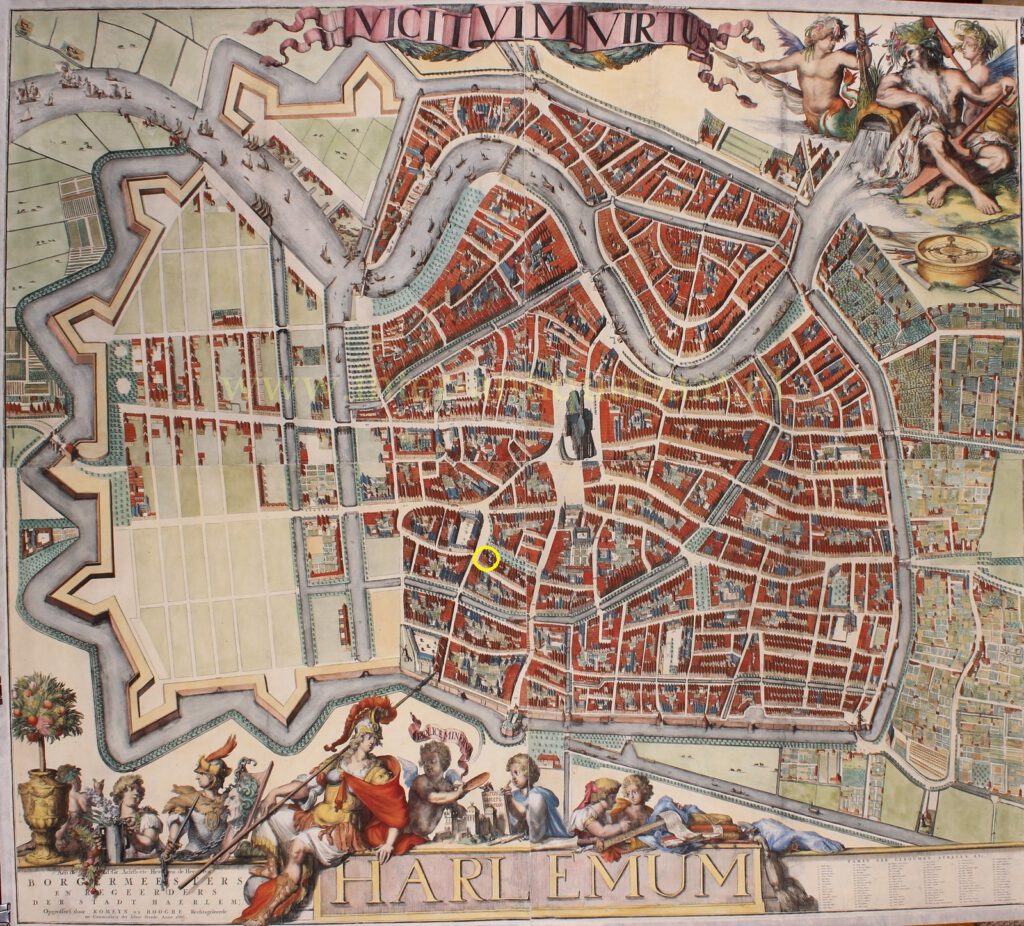
Nestled at the intersection of two historic streets, the “Krocht” and the “Nieuwe Groenmarkt” (New Greenmarket), the existing structure was erected in 1648 upon the foundations of a 16th-century building. The cellars from the earlier construction still exist directly beneath the entrance hall of the building.
The primary front building was originally designed as a shop or business space, featuring substantial storage areas above, supported by robust beams that continue to define the ambiance of the current residential loft.
The craftsmen responsible for constructing the house left their mark by carving their initials into the beams, a discovery made during the recent renovation of the loft apartment.
SHOP- STORAGE HOUSE AND RESIDENCE
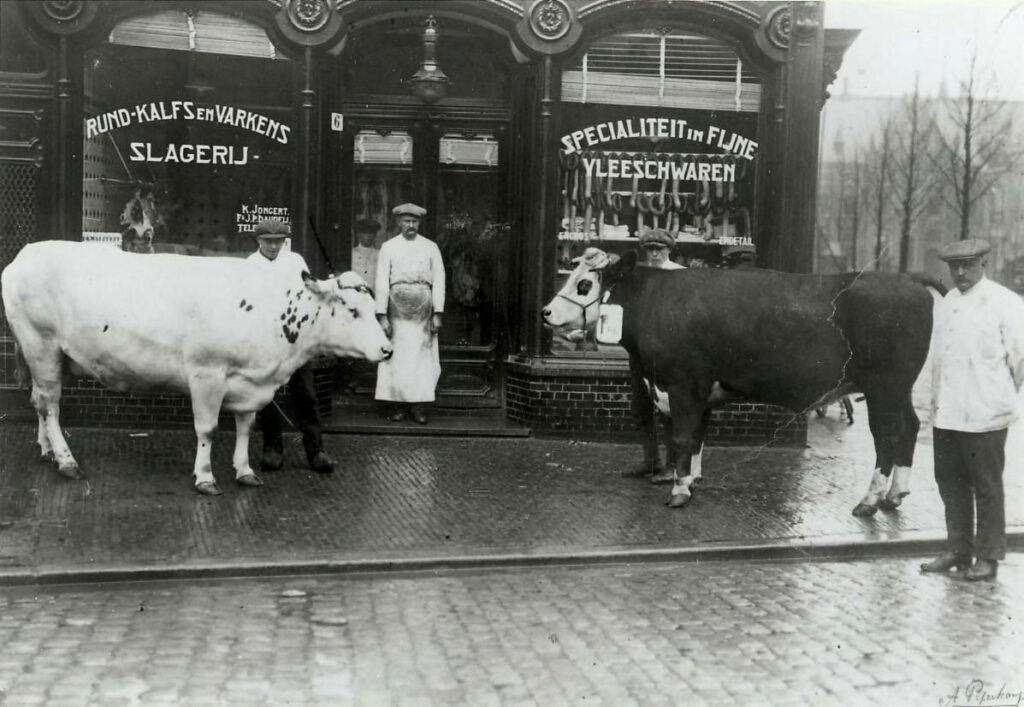
Over time, the building has housed a diverse array of shops and businesses, evolving from a butchery and bicycle shop to an art gallery and, nowadays, a sophisticated home interior shop.
HET ACHTERHUISJE
Typical for the era, small ‘backhouses’ were concurrently constructed, providing residence for shop owners or employees in close proximity to their businesses. This quaint tiny house has a long history of residents and guests from around the world.
In 2023, it was thoroughly renovated with attention and care to preserve historical details and the monumental status of the property and after transformed into B&B Het Pakhuis.
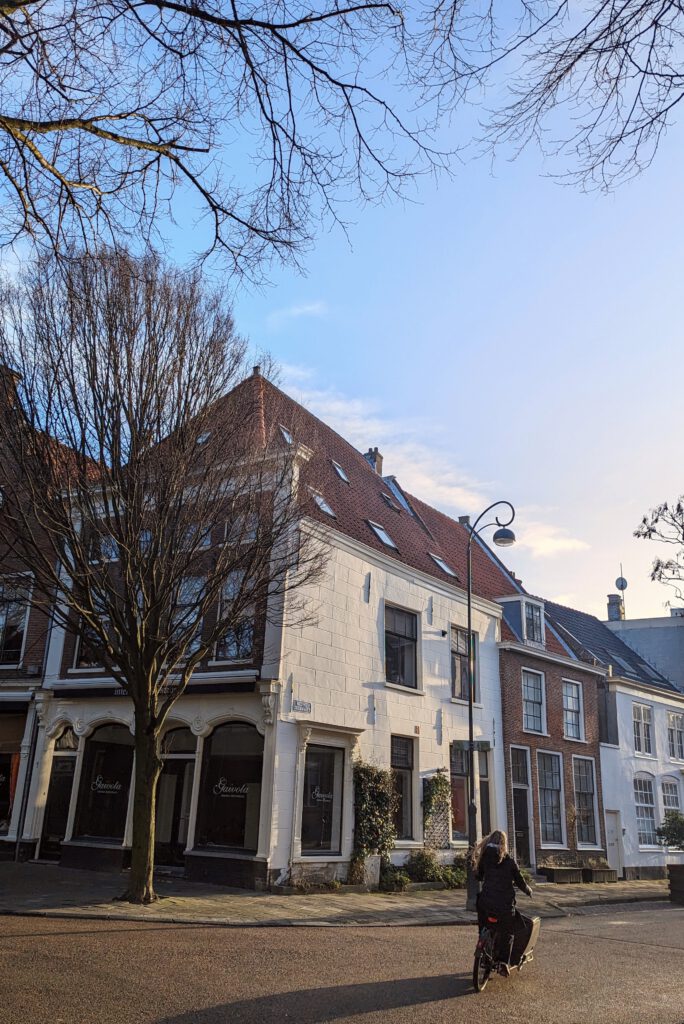
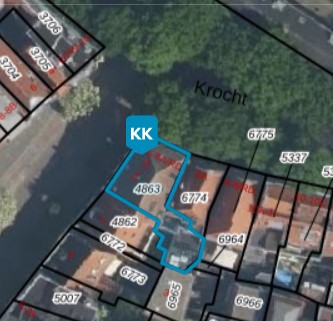
The front of the main building, with access to the backhouse.
THE NIEUWE GROENMARKT
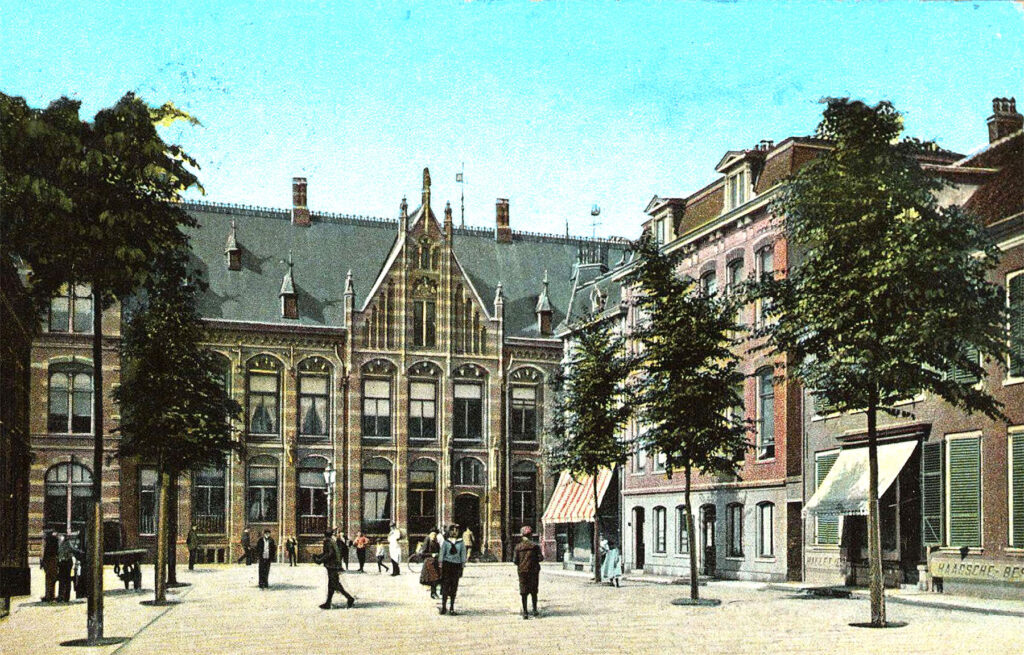
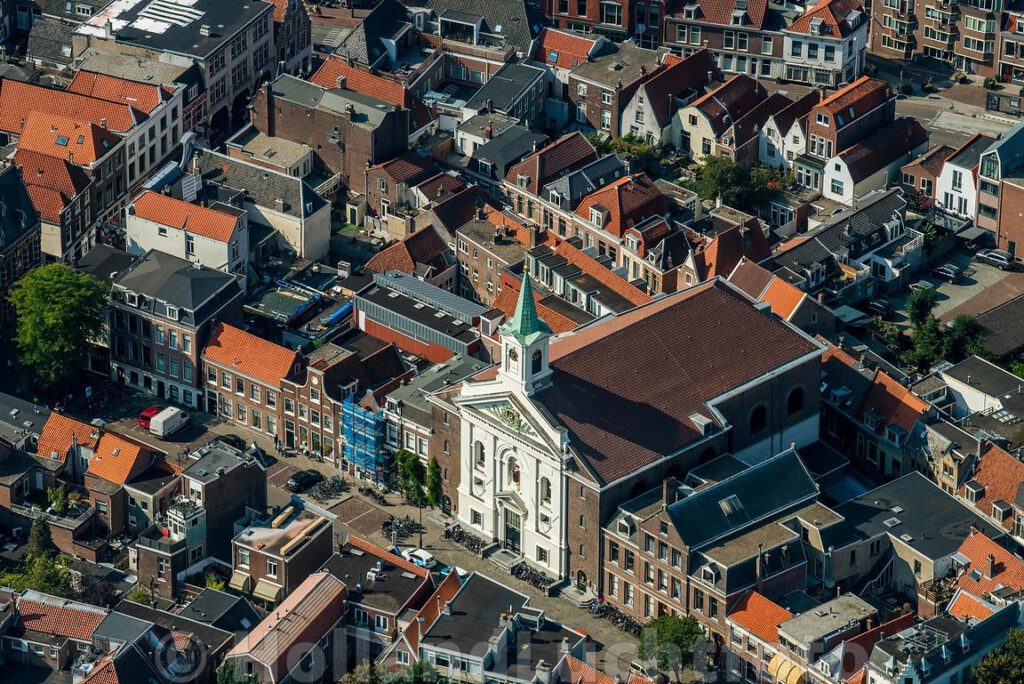
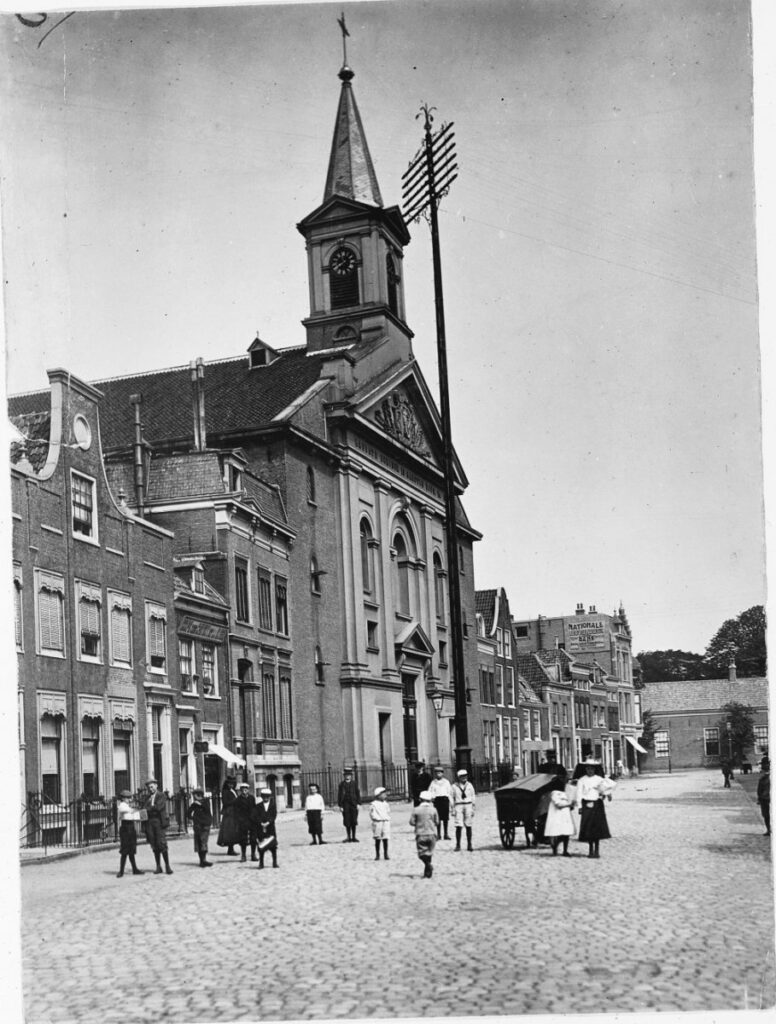
This historic street, originally built as a market square, occasionally serves as the venue for the bustling Haarlem Saturday market during events on the Grote Markt. It boasts four designated monuments, including Het Pakhuis and the mid-19th-century Groenmarkt church—formerly a Catholic church until 2022. It also houses the famous Haarlem Christmas Market each year in December.
Today, the street and marketplace form a harmonious blend of mostly residential spaces, complemented by the charitable initiatives of Stem in de Stad (“Voice in the Town”), the church, and local hospitality establishments and shops. The area is characterized by a vibrant neighborhood committee, fostering a strong sense of community where neighbors not only know each other but also actively care for both one another and the unique historic environment.